Pangong Lake
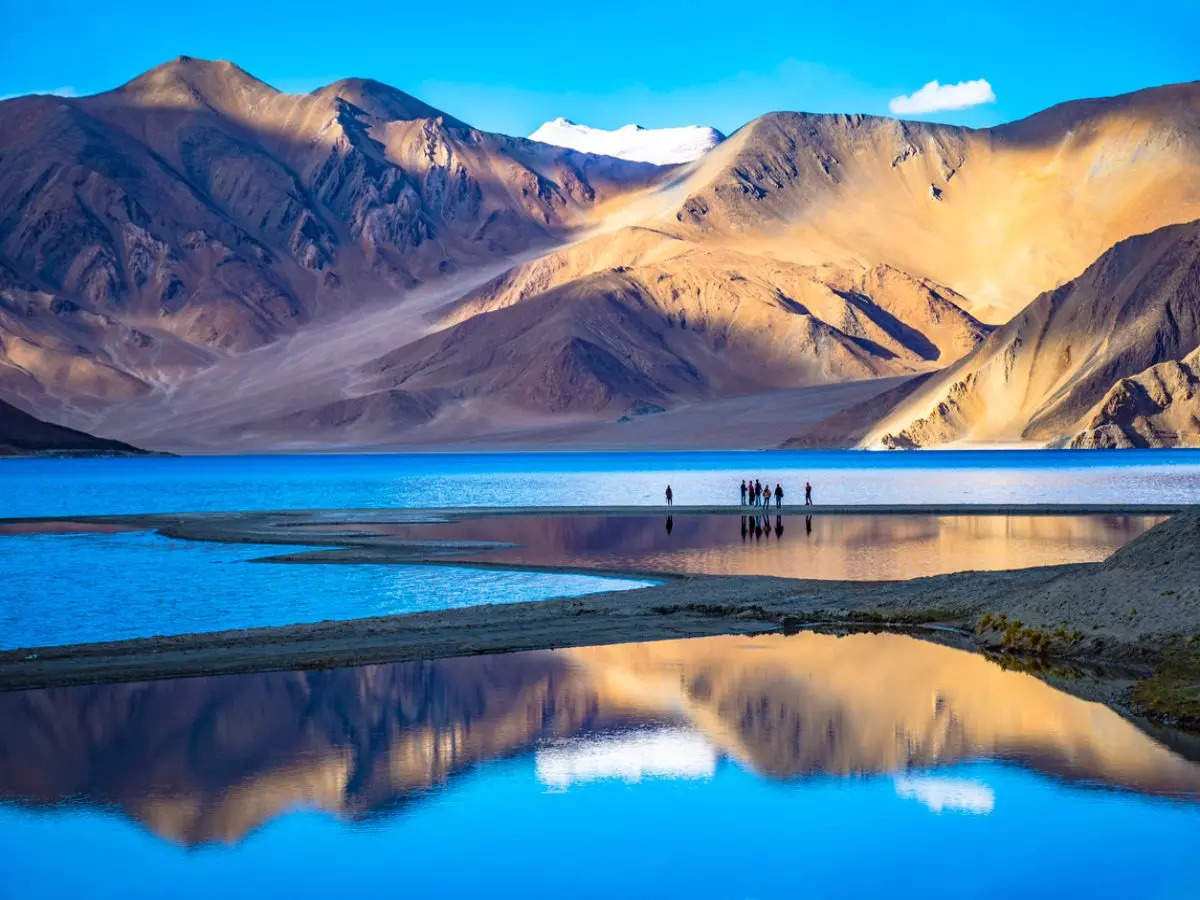
Pangong Lake (also known as Pangong Tso) is a high-altitude endorheic lake in the Himalayas, located primarily in eastern Ladakh, India, with roughly one-third extending into Tibet, China. It is renowned for its vivid blue waters that appear to change color with sunlight and its remote, stark beauty at over 4,200 m (13,800 ft).
Key facts
Elevation: Approximately 4,225 m (13,862 ft)
Length: Around 134 km (83 mi)
Location: Ladakh, India, and Tibet, China
Salinity: Brackish (not suitable for drinking)
Notable feature: Freezes completely in winter
Geography and ecology
Pangong Lake lies in a basin created by the Himalayas and the Chang Chenmo Range. With no outlet, it loses water solely through evaporation, making it saline despite its alpine setting. The area supports sparse but unique life, including migratory birds such as bar-headed geese and Brahmini ducks during summer months.
Strategic and geopolitical significance
The Line of Actual Control (LAC), the de facto border between India and China, passes through the lake. This makes Pangong a point of geopolitical sensitivity, particularly near areas known as Finger 4 and Finger 8. Both nations maintain a military presence along its northern bank.
Tourism and access
Pangong Lake became a popular tourist destination after appearing in Bollywood films such as 3 Idiots. Indian visitors need an Inner Line Permit, and foreigners require special authorization to visit the Indian side. The route from Leh via Chang La Pass offers panoramic mountain views, and limited eco-camps operate seasonally to minimize environmental impact.
Environment and conservation
The lake’s fragile ecosystem faces threats from increasing tourism and climate change. Local and governmental initiatives promote regulated access, waste control, and sustainable tourism practices to preserve its pristine landscape and biodiversity.