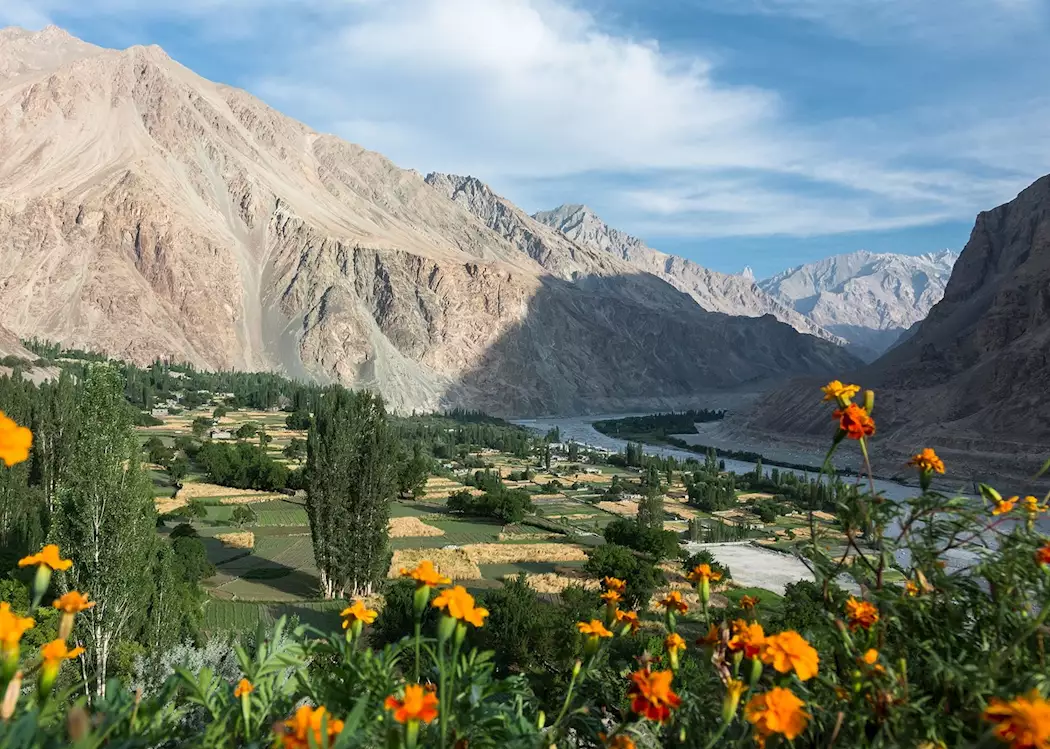
The Hunder Sand Dunes are a high-altitude cold desert landscape located in the Nubra Valley of Ladakh, India. Set amid snow-capped peaks and the confluence of the Shyok and Nubra rivers, the dunes are notable for their rare blend of arid desert terrain within a Himalayan mountain ecosystem.
Key facts
Location: Hunder village, Nubra Valley, Ladakh, India
Elevation: Approximately 4,000 meters (13,000 feet) above sea level
Distinctive feature: White sand dunes amid mountain and river scenery
Notable fauna: Double-humped Bactrian camels
Access: Via Khardung La pass from Leh
Geography and setting
The dunes spread along the banks of the Shyok River near Hunder village, forming a stark contrast to the surrounding barren mountains. This area lies within the Trans-Himalayan region and is sometimes called the Nubra Cold Desert because of its dry climate, sparse vegetation, and wide temperature swings between day and night.
Ecology and wildlife
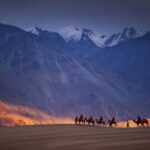
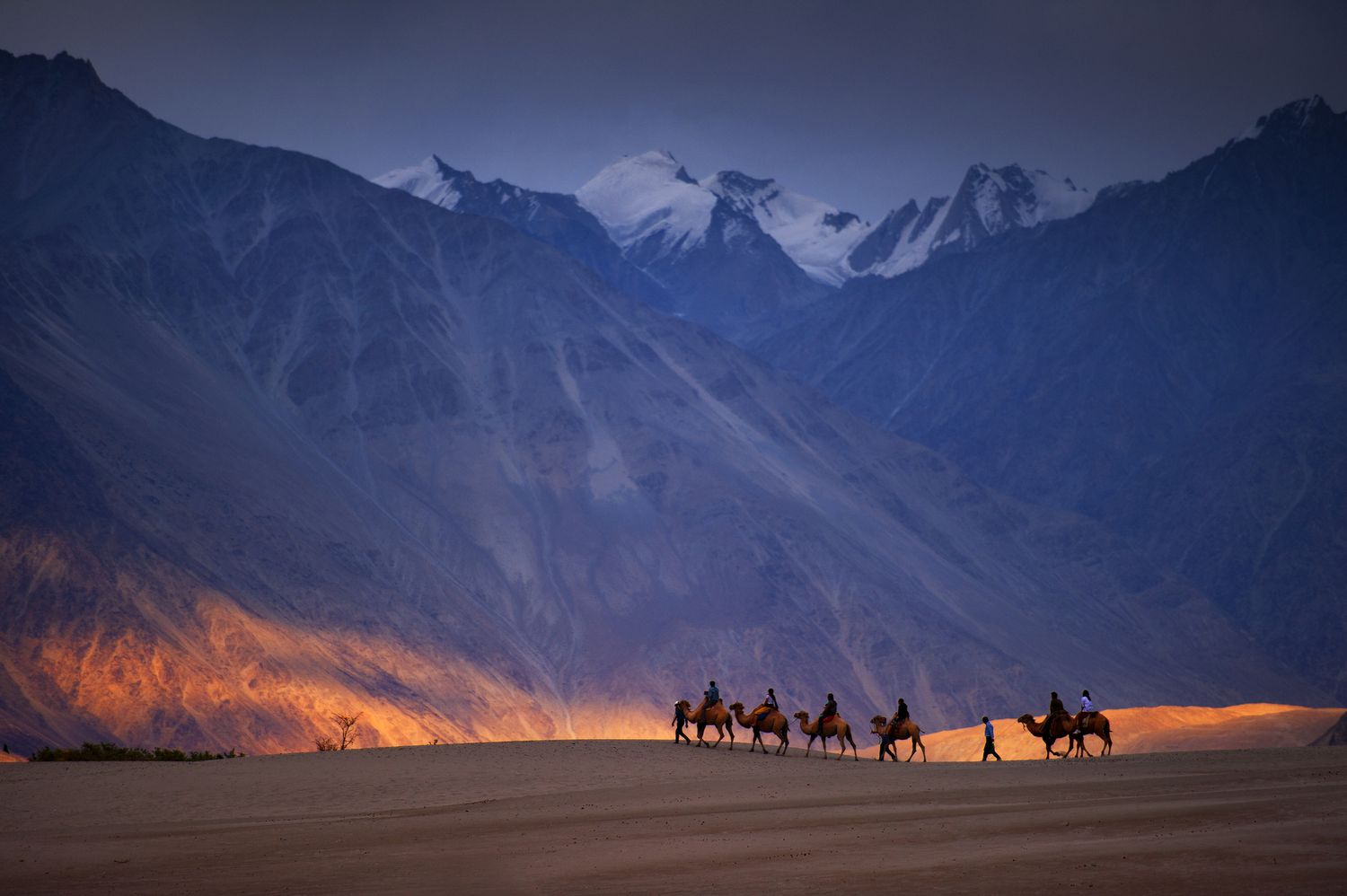
Despite its desert character, the region supports hardy flora such as seabuckthorn and tamarisk. The most iconic residents are the Bactrian camels, a species native to Central Asia that once carried goods along the Silk Route. These camels, adapted to cold deserts, now offer short rides to visitors and are a key part of local tourism and heritage.
Tourism and cultural significance
Hunder Sand Dunes are a central attraction in Nubra Valley, drawing visitors for camel safaris, sunset views, and photography against the backdrop of the Karakoram Range. The area also hosts traditional Ladakhi villages, Buddhist monasteries such as Diskit Monastery, and festivals that highlight the valley’s blend of Tibetan and Central Asian cultural influences.
Climate and accessibility
The dunes are accessible primarily from May to October, as winter snowfall can close the high mountain passes. The climate is cold and dry year-round, with summer temperatures ranging between 10 °C and 25 °C. Visitors typically reach Hunder after crossing Khardung La, one of the world’s highest motorable passes
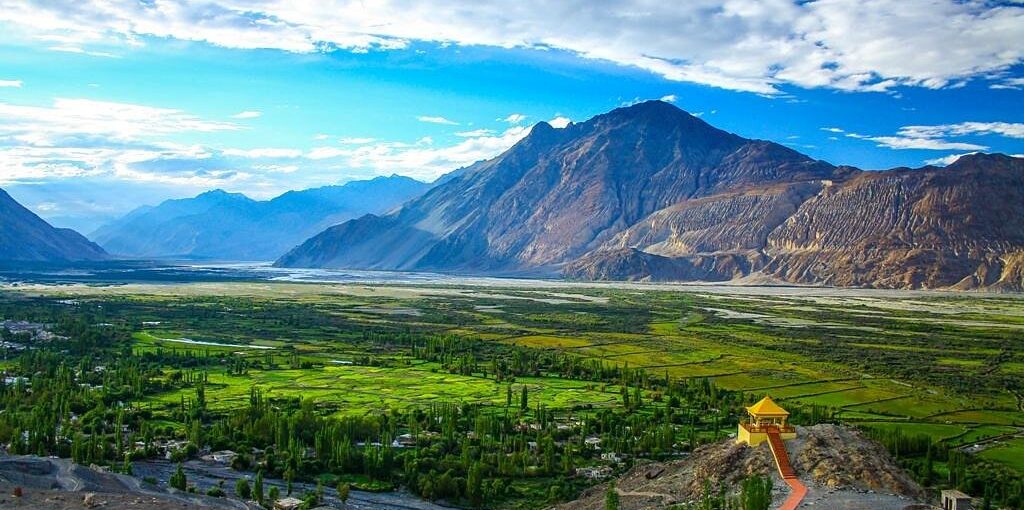
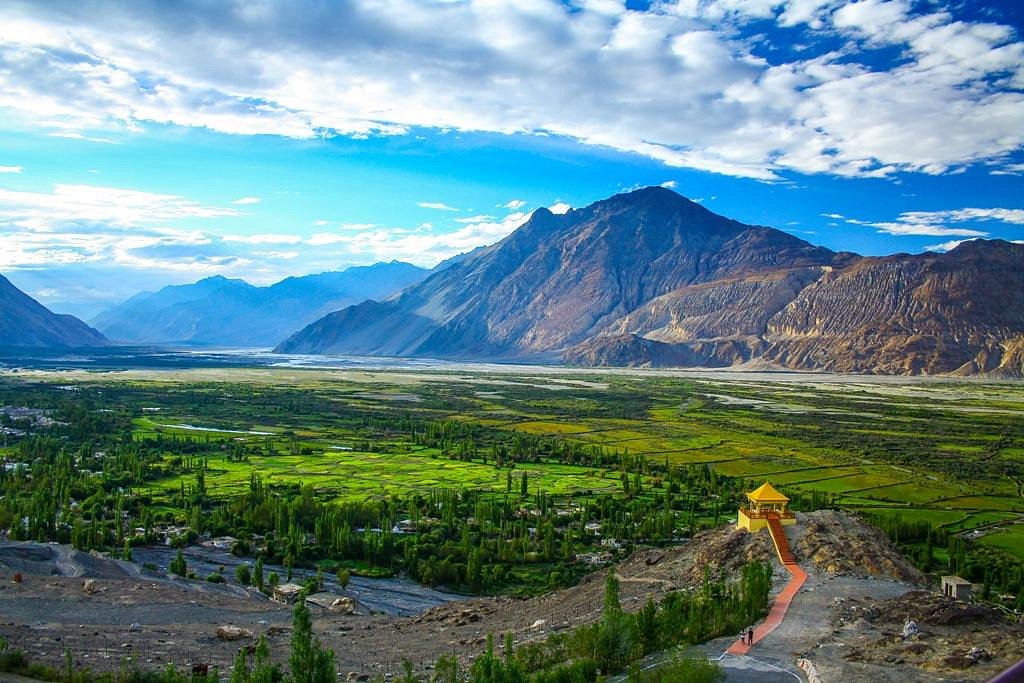
Nubra Valley is a high-altitude cold desert valley located in the union territory of Ladakh, India. Known for its striking landscapes, sand dunes, and monasteries, it lies north of Leh across the Khardung La pass and forms part of the Shyok and Nubra river basins. Its unique mix of arid terrain, riverine oases, and Tibetan Buddhist culture makes it one of Ladakh’s most visited regions.
Key facts
Location: Northern Ladakh, India
Altitude: Around 10,000 ft (3,000 m) above sea level
Rivers: Shyok and Nubra
Main villages: Diskit, Hunder, Turtuk, Sumur
Access route: Via Khardung La Pass from Leh
Geography and landscape
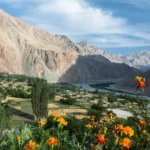
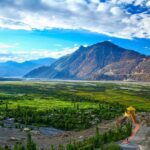
Nubra Valley sits between the Karakoram and Ladakh mountain ranges. Its terrain features glacial streams, sand dunes resembling those of a desert, and green settlements along riverbanks. The valley’s climate is cold and dry, with sparse vegetation except along watercourses. It offers views of snow-clad peaks and the confluence of the Shyok and Nubra rivers, creating a dramatic high-altitude landscape.
Culture and heritage
Predominantly Buddhist, the valley is dotted with ancient monasteries such as Diskit Monastery and Samstanling Monastery. The population includes Balti and Ladakhi communities, preserving traditional festivals, handicrafts, and dialects. The famous 32-meter statue of Maitreya Buddha at Diskit overlooks the valley, symbolizing peace and protection.
Tourism and attractions
Visitors are drawn to the Hunder sand dunes, where double-humped Bactrian camels offer rides, a legacy of the old Silk Route. Other attractions include the picturesque village of Turtuk near the Line of Control, hot springs at Panamik, and trekking or biking routes across Khardung La. The valley is open to tourists with an Inner Line Permit due to its proximity to international borders.
Ecology and conservation
Nubra’s fragile ecosystem supports limited agriculture, including barley, peas, and apricots. Increasing tourism poses challenges of waste management and resource pressure. Efforts are underway to promote sustainable tourism and preserve the valley’s delicate high-altitude biodiversity.